
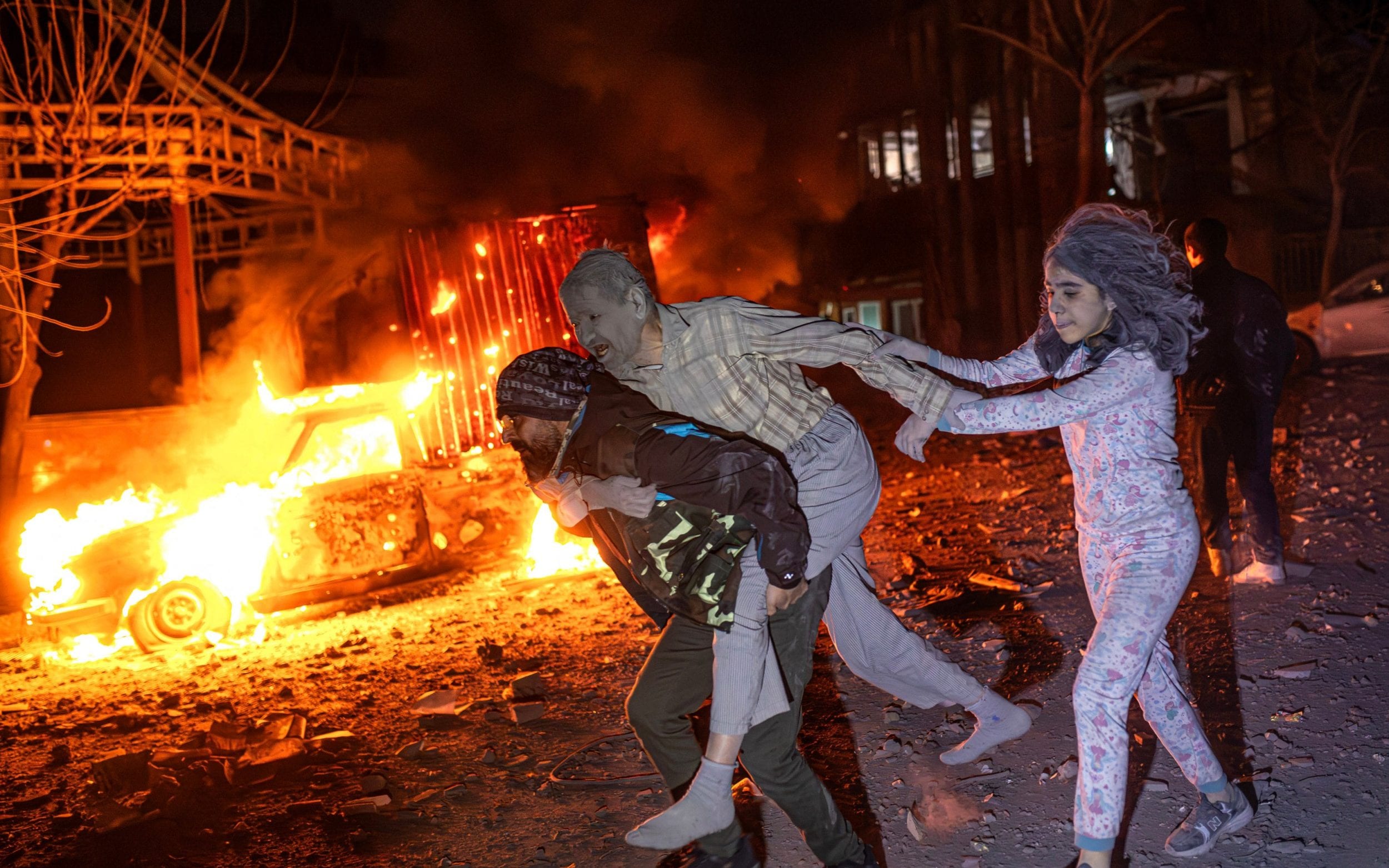
For the residents of Tehran, terror comes from two directions.
Above, Israeli and US jets continue to race across the sky, raining missiles on the heart of the city.
On the ground, streets are patrolled by Islamic Revolutionary Guard Corps (IRGC) soldiers and Basij militiamen.
Those who dare to leave the city must navigate their way out of it under fire, along destroyed roads.
Those who dare to celebrate the death of Ali Khamenei, the Iranian supreme leader, are spirited away in pick-up trucks.
“There are regime supporters and government agents everywhere on the streets when bombs are not falling,” says Javad, who owns an independent grocery shop in Tehran.
The Telegraph is the only international media outlet to have contacted civilians sheltering in the city since the war began on Saturday morning, despite the internet being shut off once again.
Residents spoke using proxies, VPNs and satellite connections, risking arrest to describe conditions as their city burned.
They spoke of a population of 10 million people trapped by bombs falling from Israeli and American aircraft, as well as Islamic Republic agents.
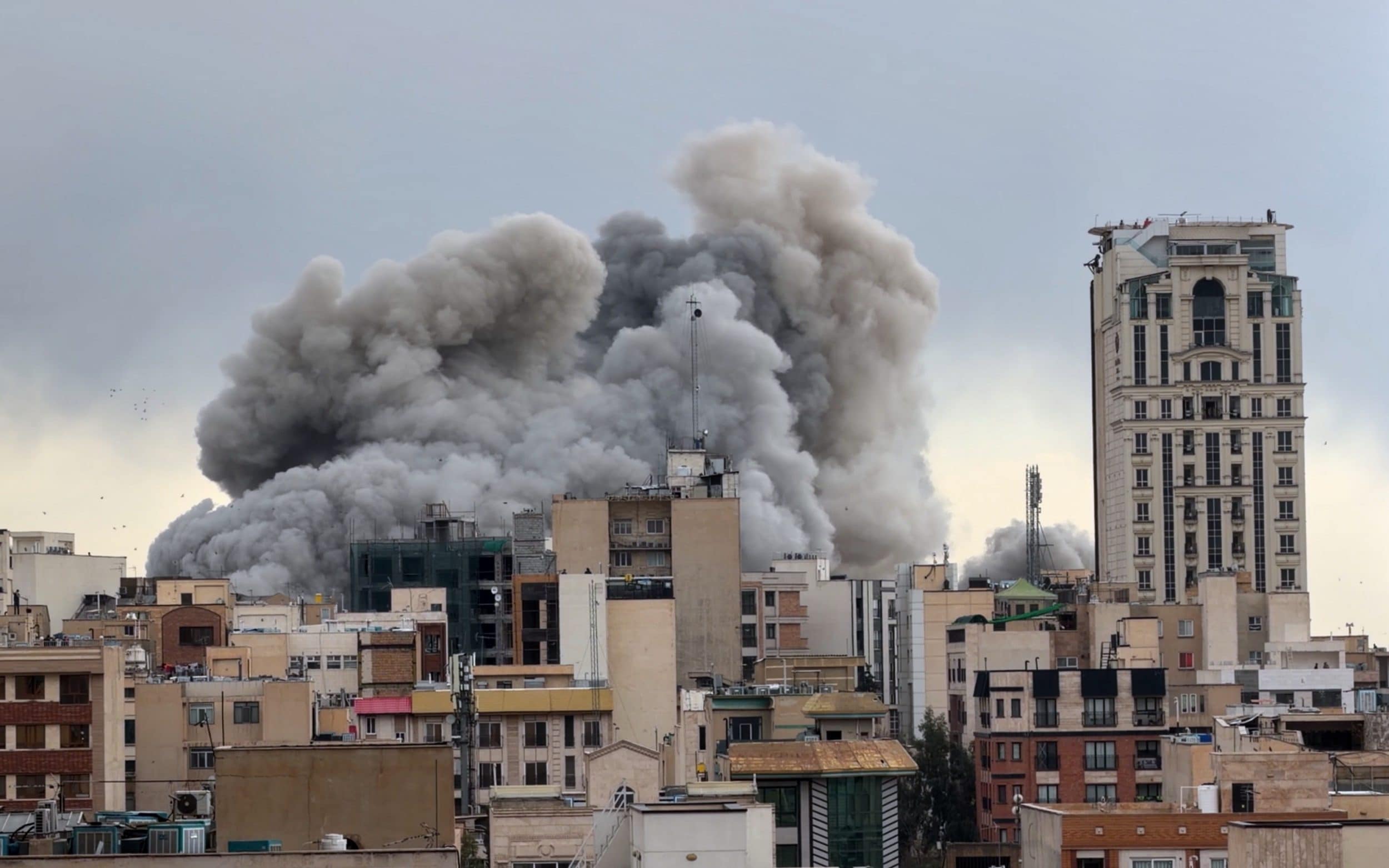
Javad’s eight-year-old daughter was bleeding from her face when the second wave of explosions started on Saturday.
Glass shards embedded in her cheeks came from windows that had shattered during a missile strike on Narmak, the working-class Tehran neighbourhood where Javad’s family has lived for 23 years.
He attempted to take her to a clinic, but was forced to turn back when more bombs fell on the city. He gathered his wife and two other children before fleeing to a relative’s house in the south of Tehran.
The building next door was hit hours later. They moved again, this time to the basement of a friend’s house in the west. But explosions followed them there too.
“I don’t know how that is supposed to save us,” Javad told The Telegraph, his voice barely audible over what sounded like another impact several blocks away.
He could not put his complaints on the record. “If they see even slight opposition, it is met with suppression,” he said.
On Saturday, the Iranian government’s supreme national security council advised residents to leave Tehran “if possible”, saying strikes would continue.
“We are not leaving Tehran because it’s not possible,” said Reza, who used only his first name for fear of arrest. “They told us to leave Tehran, but where should we go?
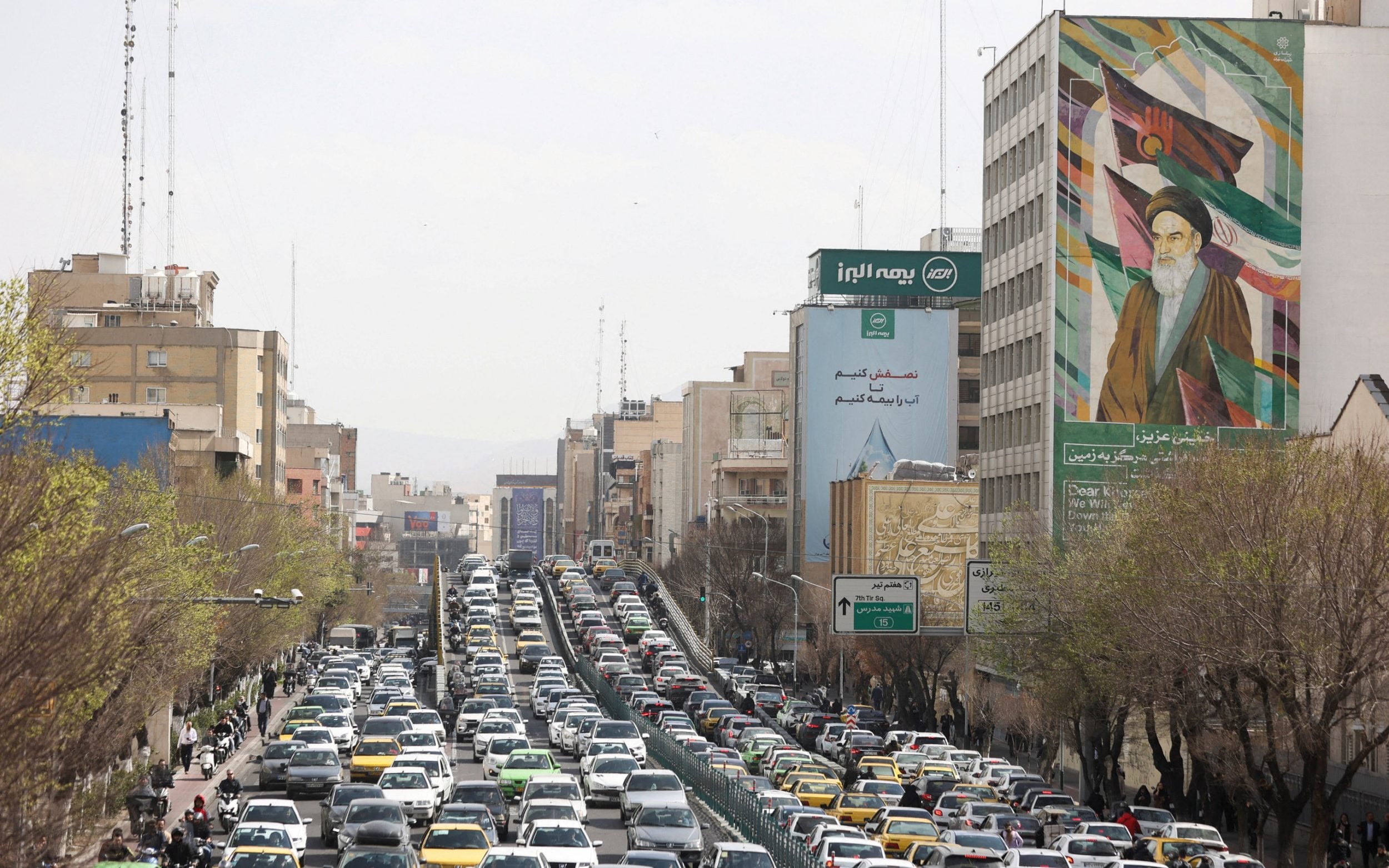
“Even the roads are being bombed. My family and I tried to leave the city, but we couldn’t because the roads were filled with cars and government supporters.”
Reza lives in the north of Tehran, in one of the more affluent neighbourhoods near the mountains. The strikes have hit motorways and mountain passes, making evacuation just as dangerous as staying.
When the first Israeli missile struck Khamenei’s compound at 9.55am on Saturday, he was drinking tea. The sound was so loud that he thought his building had been hit.
“I’m happy that the regime’s top people are dead,” he said. “But I’m worried that I may also be killed because bombs are falling everywhere in the city. I may not be alive in the next few hours.
“They say they are targeting government officials, but how do they know where we civilians live? They are also killing us.”
The public has been gripped with fear and uncertainty over whether the next missile will distinguish between an IRGC commander and a family going about everyday life.
Some 555 people have been killed across 131 cities in two days of strikes, the Iranian Red Crescent reported early on Monday.
The dead included 148 girls at a school near an IRGC base in Minab, the 14-month-old granddaughter of Khamenei and countless other civilians.
Residents have prepared for the worst-case scenario. Meysam, a software engineer in his early 30s, has been stockpiling petrol for days in anticipation of war.
When bombing began, he loaded his wife and five-year-old son into their Peugeot and tried to escape in the direction of the Caspian Sea coast.
“After leaving Tehran and driving along the road, we saw many strikes on nearby mountains and even on the road itself,” he said.
“Government vehicles were hit – some had missiles on them. It was a very scary journey, and my five-year-old son cried the whole way to the north.”
But his family made it out. Asked if they had found shelter, Meysam replied: “No, we are living in our car right next to the sea and hoping they don’t bomb us here.”
They were trying to conserve the petrol in case they needed to flee somewhere else because strikes had reached the coast.
The government’s attempt to mobilise public support has created another layer of complexity.
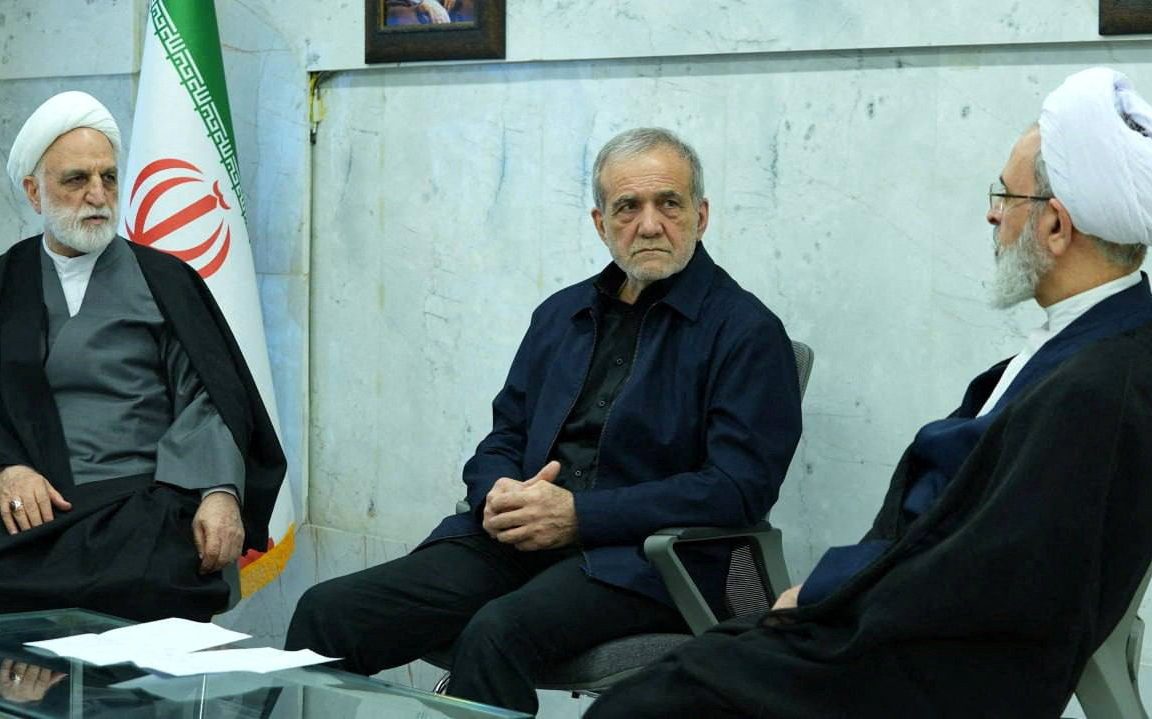
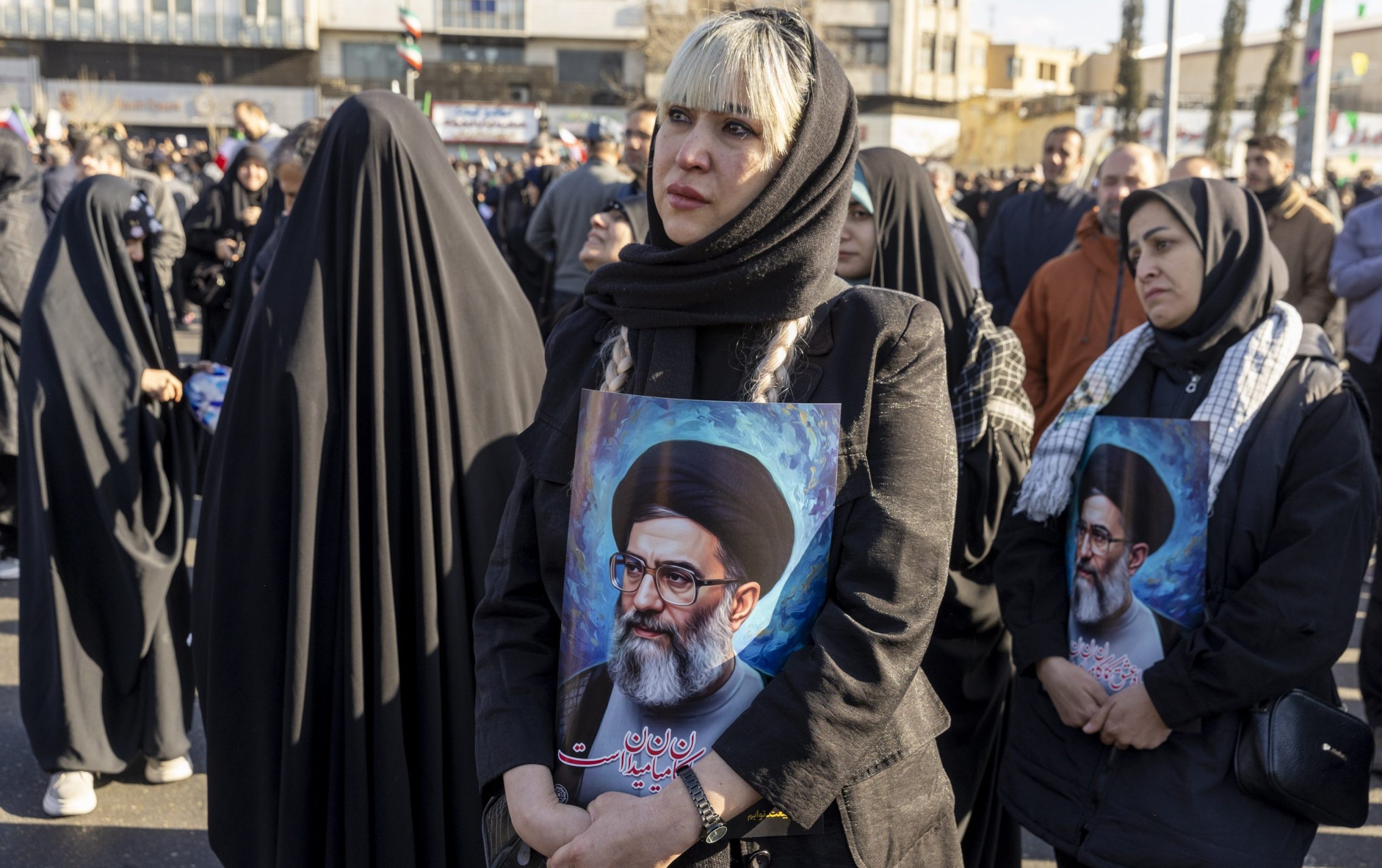
Masoud Pezeshkian, the Iranian president, called for people to gather “in mosques and in the streets” to demonstrate solidarity with the temporary leadership council, which has been formed to govern until clerics select Khamenei’s successor.
For some, the call to demonstrate loyalty was genuine. Qassem, a civil servant who described himself as a government supporter, said he had attended pro-regime rallies every day since Khamenei’s death.
“We are going to rallies every day, and people are angry,” he said. “They do not want any kind of ceasefire. We want our armed forces to take revenge for our leader.
“There is massive anger at the rallies, and people would be even angrier if any ceasefire were signed.”
For residents such as Reza and Javad, however, the rallies represented another threat. Attendance could be monitored at these gatherings. Failure to appear could mark them as disloyal whilst appearing too enthusiastic or not enthusiastic enough could draw scrutiny from the security services now on highest alert.
As Israeli jets attacked Tehran again on Monday, millions of mobile phones across the city received an identical text message from the IRGC intelligence branch.
“The enemy has plans for street riots. Any security-disrupting movement will be considered direct collaboration with the enemy. If you see any suspicious cases, inform security centres,” it read.
Abbas Araghchi, the Iranian foreign minister, told his Oman counterpart that Iran was “open to any serious efforts” to stop the escalation, marking the first diplomatic signal Tehran might seek de-escalation.
But for residents trapped there, whether diplomats eventually negotiate a ceasefire matters far less than their survival in the next few hours.
Recommended
How Iran’s regime is sticking together despite Ayatollah’s death
Read more
Late on Sunday night, Javad sent a final message to The Telegraph. His daughter’s face had stopped bleeding, although glass was embedded in her skin and he could not safely remove it.
The explosions had quietened in his neighbourhood – at least for now – and he had managed to find an open pharmacy to buy bandages and antiseptics. “We are still in the basement,” his text read.
As bombs continued to fall on Tehran on Monday, messages to Javad failed to deliver.
Play The Telegraph’s brilliant range of Puzzles – and feel brighter every day. Train your brain and boost your mood with PlusWord, the Mini Crossword, the fearsome Killer Sudoku and even the classic Cryptic Crossword.
 Bank SWIFT Code | agus setiawan | kodepos